The next Imbizo will be held in 2022
Imbizo is a Xhosa word meaning "a gathering to share knowledge". The IBRO-SIMONS Computational Neuroscience Imbizo, or ISi-CNI is exactly that: an opportunity for African and international students to learn about cutting edge research techniques in computational neuroscience.
Computational neuroscience is a rapidly expanding subject focussed on understanding and modeling the brain, while helping to designing and interprete future experiments. This school aims to promote computational neuroscience in Africa by bringing together international and local students under the tutelage of world-leading experts in the field.
The format of the school will be a combination of intensive lectures on advanced topics in computational and theoretical neuroscience as well as practical exercises in simulation and data analysis. In addition, students will perform a mini-research project under the supervision of one of the school tutors, to be presented at the end of the school.

The school will consist of a 6 working day week. Each week will be focused around one of the themes appearing below.
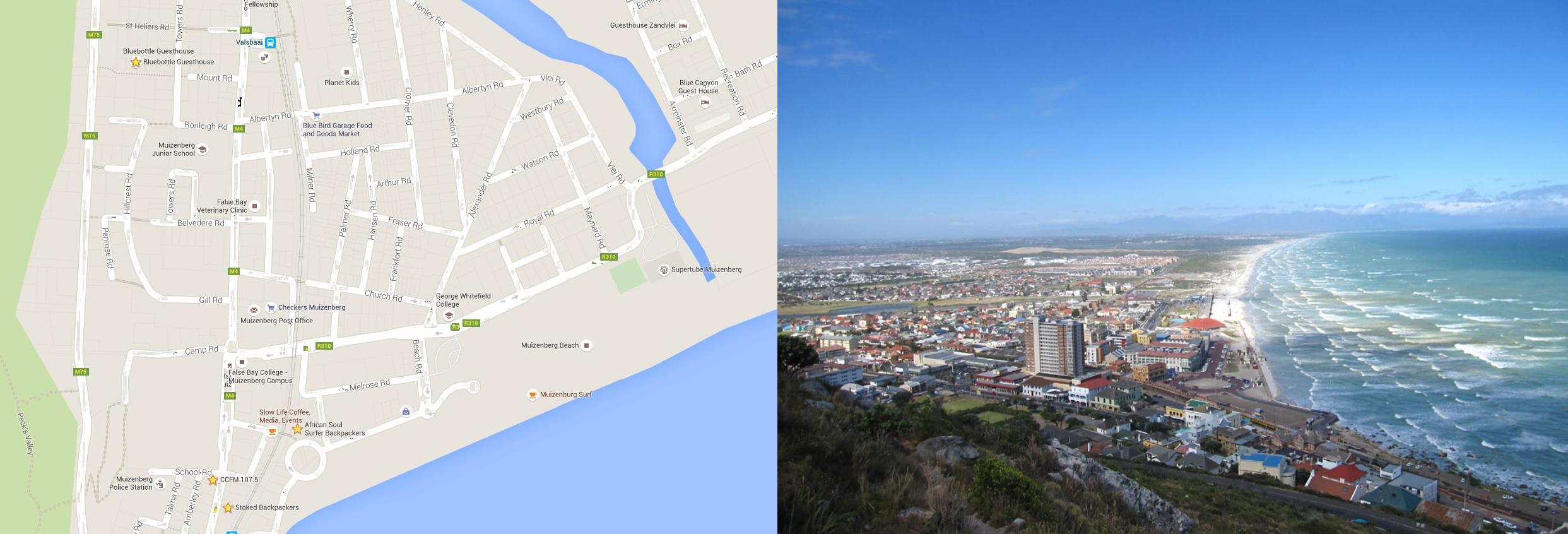
Days off will be spent exploring some of the beautiful wonders around Cape Town.
Each work day will consist of lectures in the morning, followed by either further lectures/practical tutorials in the afternoons.
What makes a neurons special? How do we model them mathematically? How do we model synapses and why are they important for neural function? These questions will guide the first part of week 1 at the Imbizo. We will also learn about cutting-edge techniques used for large-scale neural data recording from world experts in patch-clamping techniques and from the NEUROPIXEL project.
The functioning of the brain is ultimately an emergent phenomenon; a result of the complex interactions between billions of neurons. In week two we will learn how to model and analyse these dynamic networks, and how biological trends like Dale's Law make understanding these system more difficult and fascinating. We will also learn what the modern field of machine learning can teach us about learning in network architectures and how these artificial systems are similar and different to biological neural systems.
Week three will try to bridge the gap from what we have learnt about the biology and dynamics of brains to what we observe in behaviour. We will also explore how the phenomenon of spiking in neural networks makes implementing some of the ML algorithms and dynamics from week two a lot more challenging. We will also learn about cutting-edge research in brain-computer interfacing and what this is revealing about how brains work.
The school is aimed at students who are completing their masters or beginning their doctoral studies, though well motivated and advanced undergraduates or postdoctoral students should also apply. Students should have a good quantitative background: e.g. 2nd year university level experience in physics, engineering, statistics or computer science, etc. Experimental neuroscientists with some quantitative/coding experience who think the imbizo with strengthen these skills should also apply. All students should have some experience writing code.
African students are partcularly encouraged to apply.
Two example student backgrounds:
If you're still unsure but think this course would really benefit you... Apply!
Alex Antrobus (UCL) | Christopher Currin (UCT) | Peter Latham (UCL) | Joseph Raimondo (UCT) | Emma Vaughan (UCT CMC) | Tim Vogels (Oxford)
Students of the #isiCNI2022 will be lectured by some of the top researchers in each field.
The following Faculty are invited for the school.
The following Teaching Assistants will be guiding the imbizo students through tutorials and individual student projects.
University of Oxford
RadiaSoft, LLC
University of Washington
Please see Who Should Apply?
The total fee for the isiCNI2022 is EUR 1,100.00.
Thanks to our generous sponsors, significant financial assistance is available to reduce and waiver fees for students, as well as to provide some travel bursaries. If you are in need of financial assistance to attend the Imbizo, please state so clearly in the relevant section of your application.
NOTE: we cannot guarantee full financial assistance to non-resident African or non-African applicants.
African students are particularly strongly encouraged to apply.
Please be aware of the important dates below
May 2021
Late August
(approximately)
09/01/2022
to
30/01/2022
If your question is not answered here, please don't hesitate to contact us
A key aim of this school is to foster close colaboration and comaraderie between students, teaching assistants and faculty. Students will be working hard on their projects and taking part in many social activities with each other and the faculty. For this reason, all students will be required to stay in the student accommodation, attend all meals and activities etc. This also means costs are essentially the same for all students. Note though that bursaries and travel grants will be provided to as many students as possible, on a basis of need and merit. In your application, specify what financial contribution you can make and be sure to request financial assistance where asked.
This school will be most beneficial for postgraduate students and postdocs who want to fast track their education in the quantitative aspects of neuroscience. If you already have a strong background in Computational Neuroscience or Machine Learning, perhaps you would be better suited as a Teaching Assistant? Teaching Assistant applications are closed, but please come back and check in for next year.
If you have any questions, please feel free to contact us below.